

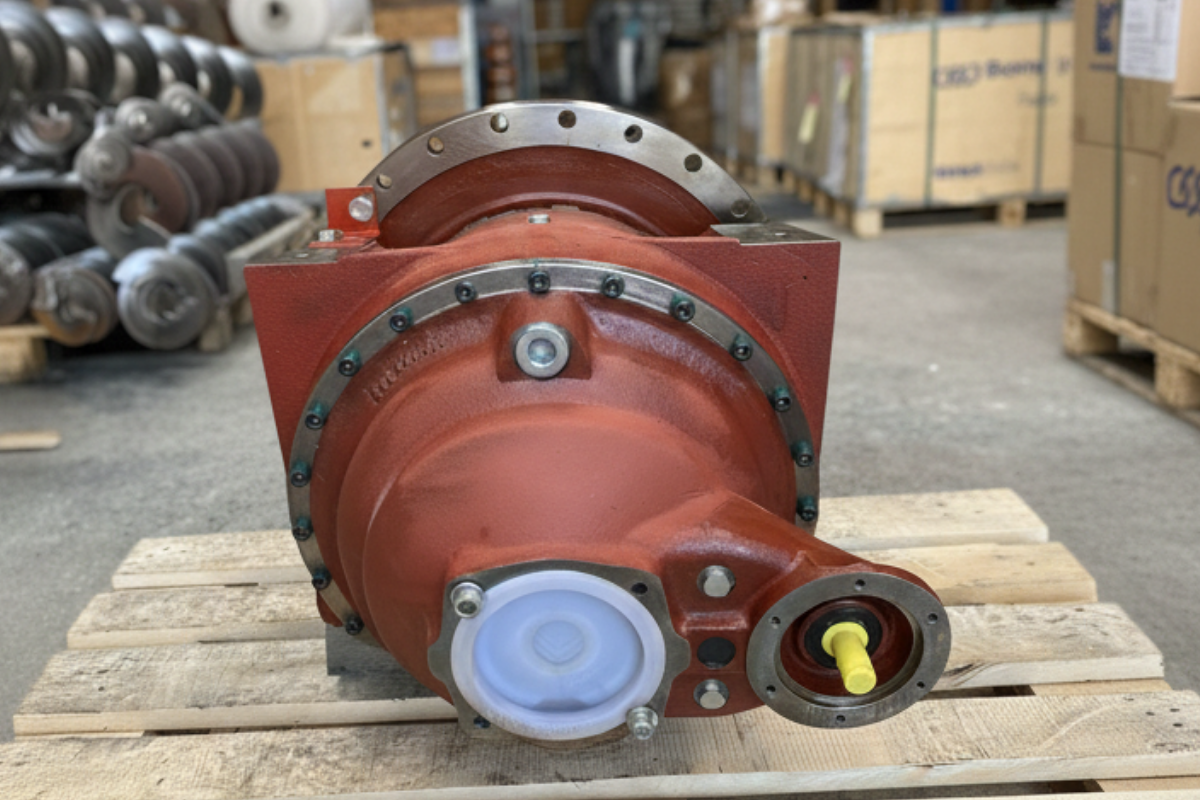
Is the Gearbox in Your Machine Original? The Hidden Cost of Counterfeit and “Refurbished” Gearboxes
A gearbox is the heart of the drive system in many industrial machines such as concrete batching plant mixers, transit mixer drums, conveyors, hopper systems, and more. It transmits torque correctly, reduces speed, and keeps the system stable. For this reason, selecting a gearbox may look like a simple “part replacement,” but in reality it directly affects production continuity, failure risk, and total cost. In recent years, one of the most common problems seen on site is counterfeit or refurbished gearboxes being sold as “new and original,” and—because purchasing decisions are often price-driven—these products being chosen.
What’s Happening in the Market? Products Sold as “New” That Are Not New Some gearboxes can be collected from various sources, have parts replaced, and then be offered for sale as “refurbished.” Refurbished products—when done correctly, with proper procedures and full transparency—are a separate topic. The issue is that some products are marketed as “brand-new original” without disclosing that they are refurbished, and in some cases even with label or serial number manipulation. Worse still, in certain situations, fully counterfeit housings and internal gear components can be presented as “branded” products and make their way into the field.
The key point is this: even if a gearbox appears to “work” at first glance, details such as internal tolerances, heat-treatment quality, and bearing or gear material determine the real difference. That’s why the problem often doesn’t show up on day one—it emerges under load and over time.
The Result of Price-Driven Choices: Hidden Damage Grows
With counterfeit or non-standard refurbished gearboxes, the following risks typically increase: Short gear and bearing life: If material quality and heat treatment are not correct, gear surfaces wear rapidly and bearings fail early. Overheating and lubricant issues: As internal tolerances and friction increase, temperature rises; oil degrades faster, seals wear out early, and leakage begins.
Noise, vibration, and performance loss: Poor assembly or incorrect gear contact increases vibration; connected components (motor, coupling, shaft) can also be damaged.Sudden stoppages and cascading failures: A gearbox failure rarely stays isolated; couplings, motors, bearing seats, frame connections, and even mixer or conveyor assemblies can be overstressed.Quality and efficiency loss: In concrete production, gearbox-related performance drops can affect mixing time and speed stability, indirectly impacting product quality.Uncertain warranty and service: For a product sold as “new,” real manufacturer warranty and traceability are often missing.
From an operational perspective, the most critical cost item is usually not the part price, but downtime and how an unplanned failure disrupts the entire operation. Choosing a low-priced, high-risk option for drive components like gearboxes often becomes “not cheap—but expensive” very quickly.
Why Does an Original Gearbox Make a Difference? With original products (OEM standard), you are not just buying a brand label; you are buying correct material and heat-treatment standards, proper gear geometry and tolerances, correct compatibility of bearings, seals, and lubrication, traceable serial numbers, technical documentation, real warranty, long service life, and predictable maintenance intervals.This difference becomes even more pronounced in the concrete industry, where there are heavy loads, dusty environments, long operating hours, and frequent start-stop cycles.
Practical On-Site Check: Signs That Raise Suspicion A 100% definitive diagnosis is not always possible on site; however, the following situations should raise questions:
- The price is abnormally low compared to the market
- The serial number or label looks suspicious, erased, or newly applied
- Packaging, casting quality, workmanship, and logo or label printing are inconsistent
- There is abnormal noise, vibration, or rapid overheating at first start-up
- The seller is not clear about warranty, origin, and traceability
Because a gearbox is a critical component, its authenticity and supply chain should be verified before purchase.
Conclusion: “Good Price” Only Makes Sense With the Right Product Counterfeit or refurbished gearboxes sold as “new and original” create serious risk for operations that make price-focused decisions. The result is early failure, unplanned downtime, cascading faults, labor loss, and a growing total cost. For power transmission equipment like gearboxes, the goal should not be only a low price, but verifiable authenticity, correct technical compatibility, and long service life.